

Now midway between Summer Games, preparations for tournaments set to feature at the Los Angeles 2028 Olympics are ramping up quickly. Athletes are mounting bids to qualify and those races are underway.
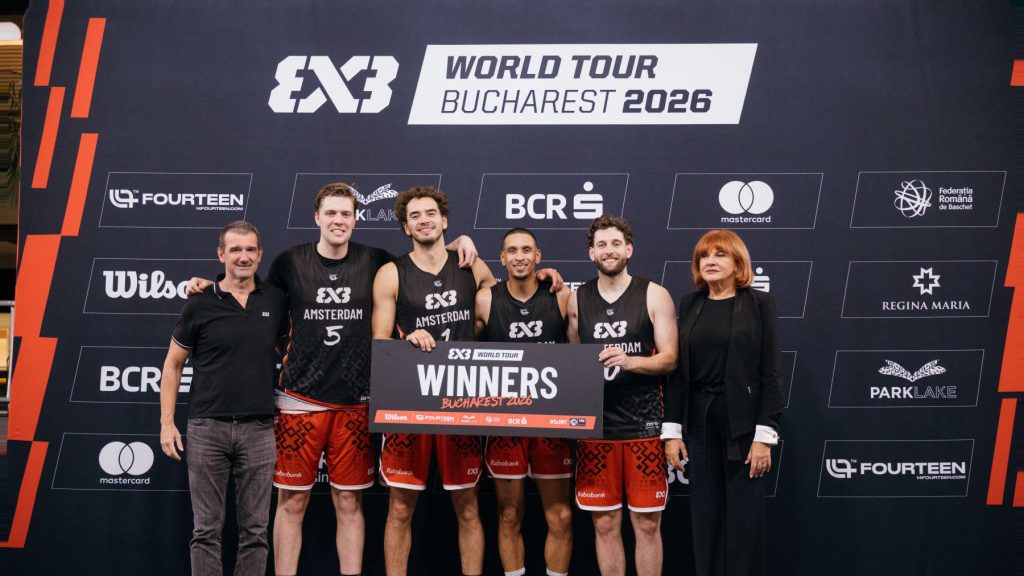
3X3 basketball – the half court, single net variation of the game with three players on each side – will appear in its third edition of the Games after debuting at Tokyo 2020 and returning at Paris 2024. The fast-paced event covers a small footprint with a temporary outdoor venue, limiting the burden for a host city while adding a great deal of fan appeal, especially for young people.
The sports program for Brisbane 2032 has yet to be finalized but the success of the 3X3 event in Paris will help drive its inclusion at future editions.
GamesBids.com caught up with FIBA’s 3×3 director, Alex Sanchez to ask some questions about the current status of the sport and his expectations for LA 28 and beyond.
GamesBids.com: What changes to the 3×3 tournament will be made that will make Paris 2024 and LA 2028 differ, and why were the changes made?
Alex Sanchez: The headline change is the size of the competition. The field expands from eight to twelve teams per gender, which means twenty-four teams in Los Angeles compared to sixteen in Paris. That is a fifty percent increase, and it is the single most important development for us in this cycle. It reflects the growth of 3×3 basketball worldwide and, critically, it allows for broader representation. For the first time, all five FIBA regions are guaranteed a place at the Olympic Games.
The second significant change is how teams qualify. For LA28 we have extended the Federation Ranking window from twelve to twenty-four months. Results across the entire FIBA 3×3 Pro Circuit and our Cup competitions now contribute to the Olympic race over a two-year period rather than a single season. Every World Tour stop, every Women’s Series event and every Challenger now carries meaning on the road to Los Angeles. The first qualified teams for LA28 will be confirmed in December 2027, starting a thrilling race to compete against the world’s best 3×3 players in one of the world’s most iconic basketball cities.
We have also structured four Olympic Qualifying Tournaments in 2028, two of which are integrated into the Olympic Q-Series in Tokyo and Shanghai. Together these pathways make qualification more competitive and more global than at any previous Games.
GB: What are your thoughts on the LA28 venue location?
AS: 3×3 basketball will be played at Valley Complex 3 in the Sepulveda Basin Recreation Area, in a temporary open-air venue.
Two things make this location particularly well suited to our discipline. First, it is outdoors and temporary, which is where 3×3 basketball has always belonged. We are a discipline that plays in city squares and public spaces, close to the crowd, with no permanent construction required.
Second, we are part of a cluster of urban disciplines. 3×3 basketball sits alongside BMX Freestyle, BMX Racing, Skateboarding and Modern Pentathlon in the same zone. That creates exactly the kind of festival environment where our discipline performs best, and it gives fans a reason to spend a full day in the area rather than attending a single session.
GB: How are preparations going for the Q-Series in Tokyo and Shanghai?
AS: Preparations are progressing well and in close collaboration with the IOC and the local organizers in both cities. Tokyo will stage its event from 4 to 7 May 2028 and Shanghai from 11 to 14 May 2028, with one Olympic place per gender available at each.
Both cities carry real significance for us. Tokyo hosted the Olympic debut of 3×3 basketball in 2021, so returning there as part of the final qualification pathway has a certain symmetry. Shanghai has become one of the leading destinations on both the World Tour and the Women’s Series calendars, and will host the Women’s Series Final through 2028, making it the setting for the climax of our flagship women’s professional season in each of the next few years. China has developed into one of the most important markets for our discipline, and we know both cities well.
Placing 3×3 basketball alongside other urban and youth-focused disciplines, in a shared festival-style environment, is a model that works for athletes, fans and broadcasters alike. These will be high-stakes events with the last Olympic tickets on the line, and that combination of urgency and atmosphere should make for compelling competition.
GB: What are your thoughts on the new Olympic sports programme rules with respect to disciplines, and how will that impact the future of 3×3 at the Games? Will you be doing anything special to ensure 3×3 remains on future programmes?
AS: Our approach is to keep doing what has brought 3×3 basketball to this point. The growth speaks for itself. Our digital, and broadcast audiences keep growing year on year. On the participation side, our Youth Nations League now spans more than seventy countries and remains the engine feeding the entire ecosystem, while our professional circuit continues to expand with more events, more players and more national federations investing in the discipline every year. Around all of it is the festival atmosphere that defines a 3×3 basketball event, with music, culture and elite competition in the heart of the city, free and open to the public.
Source link